Healthcare today feels like a boiling pot with a rattling lid. Pressure from incoming patients, piling documentation, constantly changing laws, and renewed policies keeps rising, while everyone is expected to pretend nothing is about to spill over.
You probably stumbled on this page searching for something that can help keep this lid intact. Patient communication software is part of the answer – but only part.
According to research published in BMC Medicine, 20 percent of patients miss more than 30 percent of their scheduled appointments, and 9 percent miss over a third. Fear, digital noise, and a lack of clear guidance all play a role. Every patient still expects attention, clarity, and proper care, and they feel it when communication between the medical staff is consistent.
But here’s what most patient communication articles don’t address: the problem often doesn’t start between the patient and the provider. It starts between the nurse and the doctor. Between departments. Between shifts.
A missed internal handoff becomes a delayed diagnosis. An ambiguous message between specialists becomes a medication error. A fragmented workflow where staff are juggling phone calls, emails, and five different apps becomes a gap that patients fall through – without ever knowing why their care felt disjointed.
Healthcare professionals are expected to run appointments, document every interaction, update records, write prescriptions, attend meetings and trainings, and respond to emergencies – all while staying calm and compassionate. On top of that, there’s always a stack of records waiting to be double-checked. And if the wrong channel gets used to send sensitive PHI to a specialist, the best-case scenario is another security training meeting.
This is why solving patient communication requires two things working in parallel: tools that help patients stay informed and engaged, and platforms that help care teams communicate clearly, securely, and without friction.
Patient-facing platforms handle the patient side. Chanty handles the team side – the coordination layer that makes every patient interaction possible.
At Chanty, we built our platform for teams that need to move fast, stay aligned, and communicate clearly under strict privacy and compliance requirements. We work with healthcare organizations that understand a simple truth: when internal communication breaks down, patient care suffers. When teams are aligned, care improves.
In this post, we’ll explore why effective communication has become one of the biggest pressure points in healthcare, the common challenges providers face, and how patient-focused communication platforms can transform care delivery.
Curious how Chanty can fit into your clinical workflow? Book a quick demo and explore a better way to stay connected.
Patient communication software
- Chanty: Secure and flexible messaging and task management tool enabling patient outreach, appointment reminders, and video calls for smoother collaboration and better patient care.
- RXNT: Cloud-based service offering secure messaging and appointment scheduling tailored for healthcare providers.
- Emitrr: Patient engagement solution with automated text and voice messaging designed to reduce no-shows and enhance communication.
- Phreesia:Comprehensive patient intake and interaction system that integrates appointment scheduling, forms, and reminders.
- Mend: Communication app focused on improving patient interaction through text, video, and telehealth options to enhance patient experience.
- TigerConnect: Secure messaging and collaboration solution connecting healthcare teams and patients for efficient information exchange.
- Relatient: Patient engagement service that manages appointment reminders, confirmations, and billing inquiries.
- Artera: Communication tool supporting appointment reminders, follow-ups, and surveys to keep healthcare teams connected.
- PatientPop: Service aimed at improving patient engagement by managing appointments, reminders, and collecting reviews.
- Weave: Integrated solution combining text, phone calls, emails, and reminders to enhance patient care.
- Linggo: Voice-driven app designed for non-verbal patients to connect with healthcare providers through personalized, real-time text messaging.
- Patient Communicator: App that streamlines appointment reminders, messaging, follow-up notifications, and doctor-patient communication, encouraging timely interactions between patients and healthcare providers.
- Spoken: Speech-to-text aid helping patients with speech impairments convey needs via instant, accurate text messages.
- LetMe Talk: Mobile app offering non-verbal patients a customizable communication tool to express themselves and facilitate smoother healthcare interactions.
What modern patients expect from healthcare communication
Today’s patients expect more than appointment reminders. They want clarity, transparency, and control. Waiting on hold or playing phone tag feels outdated. The modern patient is used to instant access. A few clicks now replace days of effort for tasks that once took weeks. They expect the same speed and convenience in healthcare, with everything in one place and tasks handled right from their phone.
61% of healthcare consumers say they want their healthcare communication to feel more like online shopping – fast, clear, and seamless. Simple consultations, test results, and prescriptions are now expected online. Younger generations, in particular, prefer to minimize in-person visits. Post-pandemic habits have reinforced this. Patients avoid clinics unless absolutely necessary.
Modern patients don’t just want information. They want to understand their health journey, know what’s happening, when, and what’s expected of them. Clear, timely communication builds confidence, trust, and engagement. Digital healthcare communication platforms play a key role in enabling this.
True patient engagement goes beyond reminders. Systems must fit schedules and preferences. Patients need instant access and the ability to act on information, becoming active participants in their care without friction.
Patients want:
- Speed and convenience: No one likes to be on hold or to have to play phone tag. Patients want quick responses and easy access to providers, whether by phone, text, or app.
- Transparency: Clear information about their health journey-what treatments they need, when appointments are, and how much things will cost.
- Access and control: Patients want services that can provide them with opportunities to manage their care as they see fit: access their records, know their progress, and automatically stay updated without much hassle.
Why healthcare providers need better patient communication platforms
Let’s say the healthcare industry is not only about treatments and diagnoses. Many healthcare professionals naturally focus on the illness itself, sometimes overlooking the human behind it, whether as a coping mechanism or simply professional deformation. Yet patients remain human. They can feel scared, confused, frustrated, or even irritated. Communication is the simplest way to connect with them and ease these concerns, while also protecting your organization from operational and reputational risks.
When communication falters, the consequences are serious.
- Missed appointments and scheduling confusion
Without streamlined tools, staff spend hours rescheduling visits, calling patients, or following up on no-shows. This increases administrative workload, reduces staff productivity, and delays the delivery of care. - Miscommunication and clinical errors
Important information often passes through multiple professionals, and sometimes entire departments, before reaching the patient. Each step increases the chance of misunderstood instructions, missed test results, or unclear follow-up actions. Over time, this raises the risk of medical errors and can compromise patient safety, while administrators carry the weight of compliance and reputational consequences. - Inefficient telehealth and follow-up processes
Virtual visits, test notifications, and digital follow-ups frequently rely on manual coordination. Without a clear structure, staff are forced to switch between multiple channels to ensure nothing is overlooked. This consumes time, increases stress, and creates gaps in communication that patients quickly notice. - Patient dissatisfaction and erosion of trust
Slow responses, missed notifications, or unclear instructions frustrate patients and weaken their confidence in care. Dissatisfaction can lead to disengagement, complaints, and negative reviews, which may gradually affect outcomes and reduce loyalty to the healthcare organization. - Regulatory and compliance risk
Communication breakdowns, lost messages, data leaks, or the use of unsecured channels can result in HIPAA violations. Non-compliance exposes organizations to audits, financial penalties, and long-term reputational damage. - Data fragmentation and lack of visibility
When communication is scattered across emails, phone calls, chats, portals, and paper notes, patient information becomes fragmented. This makes care harder to track, limits operational visibility, and increases the likelihood that critical updates are missed. - Staff burnout and turnover
Constantly mediating communication while navigating fragmented workflows drains staff energy. By the end of a shift, teams are often exhausted and overwhelmed, which increases the risk of errors and accelerates burnout.
Patient communication platforms are healthcare software tools that centralize, automate, and secure interactions between patients and healthcare organizations. By automating reminders, centralizing messaging, and enabling secure, direct communication, these tools remove much of the administrative and mediating burden from staff. As a result, less time is spent managing processes and more time is available for patient care. At the organizational level, workflows become more efficient, compliant, and measurable, while patients receive timely, consistent, and transparent communication.
In other words, patient communication software helps shift staff from constant intermediaries to focused caregivers, reducing operational friction, minimizing risk, and strengthening both patient engagement and overall organizational performance.
How patient communication platforms improve care and engagement
Patient communication platforms are more than tools – they are game-changing platforms for both the patients and caregivers. Centralizing communication and automating routine tasks, they foster a culture where patients are continuously engaged, educated, and cared for from start to finish in their journey. These solutions enable healthcare organizations to meet patient expectations for timely, effective, and transparent exchanges, while allowing professionals to focus on what matters most: delivering quality care.
- Automation ensures that no follow-up call, message, or alert is ever missed and improves continuity of care.
- Secure Messaging: Fast, HIPAA-compliant communication for discussing treatments and getting answers without the wait in between.
- Integrate Telehealth: Virtual consults make it easier for them to access health care. Connect from anywhere with patients.
- Centralize information: From appointments and test results to treatment plans, everything is located in one place that is so easy to get to, hence minimizing confusion while saving time.
Patient communication platforms are far more engaging for the patients by answering the needs of becoming better informed and satisfied. The best health outcomes, as a result of a good doctor-patient relationship, enhance satisfaction for the patient and provider alike.
Key features of the best patient communication software
Choosing the right patient communication platform means focusing on features that address both patient needs and provider challenges.
Here are the features to prioritize:
- Personalizable messaging: Not all patients are alike, so messaging and reminders provided to patients will be based upon the need. Reminders for appointments, updates regarding prescription filling, and helpful tips in their health could all be given; these should not feel generic in nature but, rather, personalized.
- Appointment scheduling: Providing your patients with online booking, rescheduling, and cancellation facilities lets them organize their schedules easily, reducing telephone follow-up calls for both your staff and your patients.
- Data security: Management of health information is one of the most responsible tasks. Your platform has to be HIPAA-compliant, enabling encryption and secure messaging for protection against data disclosure of your patients.
- Integration with EHR: : For patient-facing platforms, smooth EHR integration keeps all information current and in one place. For internal team tools like Chanty, the focus is on keeping clinical staff aligned so they can act on that information quickly.
Top patient communication platforms for 2026
Chanty
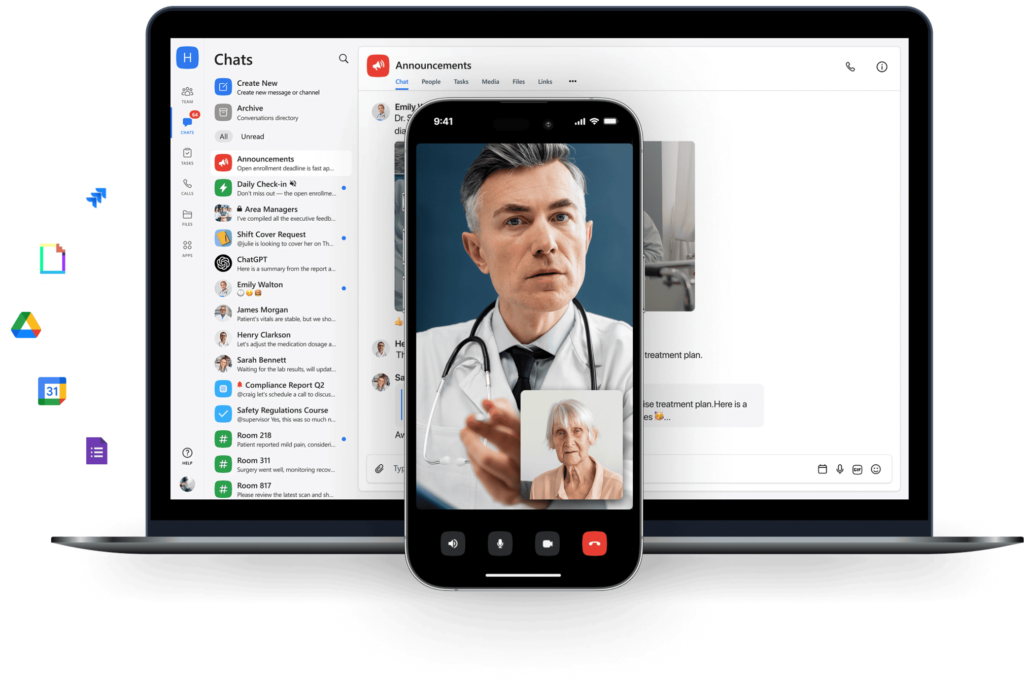
Most patient communication breakdowns don’t start at the patient level – they start inside the care team. A missed message between a nurse and a physician. An unclear handoff between departments. A critical update was buried in an email chain that no one flagged in time.
Chanty is built to eliminate that internal friction. It gives healthcare teams a single, secure space to share real-time updates, coordinate on treatment decisions, assign tasks, and make sure nothing slips between the cracks. When the team is aligned, everything downstream – including patient communication – works better.
With Chanty, your team can:
- Share patient updates instantly across departments and shifts
- Coordinate care decisions with fast, structured messaging
- Assign and track tasks so every action has an owner
- Access large medical files – images, lab reports, detailed documentation, etc – with 20GB of cloud storage per user
Privacy and compliance are built in, not bolted on. All communication is protected with HIPAA-compliant encryption. The Business and Enterprise plans include an IP Allowlist feature, restricting access to authorized clinical networks only. Your team communicates freely, and your organization stays protected.
Chanty is available on desktop and mobile, keeping providers connected whether they’re at a workstation, rounding, or on call. It integrates with the tools your team already uses, reducing app-switching and keeping focus where it belongs: on the patient.
Think of it this way: patient communication platforms help patients feel heard. Chanty helps the team behind those platforms stay coordinated enough to deliver on that promise.
RXNT

RXNT offers a multichannel platform that helps enhance patient engagement through the facilitation of easy, accessible communications with them. It will let patients know about their visits, inform them about changes in their records, and send notifications through text messaging, email, or telephone calls-all at their preferred option. It is a HIPAA-compliant system and thus assures safety and privacy concerning health information in transit.
The key highlights of RXNT include the custom messaging feature, where reminders can be personalized to the needs of each patient in terms of appointments, test results, and follow-up care. This will help increase patient engagement while minimizing no-shows and missed appointments, hence enhancing overall healthcare efficiency.
Additionally, RXNT easily integrates with Electronic Health Records, allowing providers to access patient information in real time and thus coordinate care within the health team. Patients will benefit from this integration in that timely updates are provided, and informed decisions about their care can be made without waiting for phone calls or visits.
Emitrr
The Emitrr platform offers omni-channel delivery of messages and reminders via patients’ preferred methods – SMS, email, or voice calls. This ensures patients never miss important updates and stay fully informed. Emitrr’s real-time system guarantees that all critical information, such as appointment reschedules or lab test results, reaches patients promptly without delay.
Emitrr assures superior security by complying with HIPAA and hence protects the patient’s most coveted right to privacy. It allows healthcare providers to manage patient communication levels, with opportunities to send automated alerts after the first reminder to follow-up notifications.
Emitrr also enables better patient health management by providing a deep understanding of daily interaction volumes, engagement metrics, and satisfaction scores. With transparent access to these insights, healthcare professionals can significantly improve their outreach strategies, aiming to achieve high standards of patient engagement.
Phreesia

Phreesia is prominent as a patient engagement platform that is a comprehensive network of patient contact points, such as online scheduling, automated reminders, intake forms, and secure messaging. Through this platform, communications become easier for online appointment booking and form completion ahead of patient visits. This more or less reduces wait time and clearly improves patient convenience.
A significant feature of Phreesia is built-in EHR integration to keep patient information recent. Why they are sharing a common development platform can be seen to minimize the overwhelming administrative burden and to clear the way for more direct concern of patient needs.
Phreesia Web Services’ custom messaging helps providers engage patients throughout the continuum of care. From appointment reminders to pre-visit instructions, to follow-up reminders, patients receive clear, consistent communications that keep them informed and on track with their health management.
Mend

Mend is specifically known for its telehealth integration, hence a very important tool used by virtual care providers. Security messaging and video consults are offered that are HIPAA-compliant, very critical in expanding patient privacy as the health services expand.
Beyond telehealth, Mend offers automated appointment reminders and patient intake forms that help practices smooth out workflows and reduce no-shows. Text message reminders can be personalized by patient preference to make sure patients receive information in the way they find most convenient.
It also gives the powerful data reporting tools in managing and tracking key performance indicators regarding engagement rates and no-show stats. This positions the provider better in enhancing the communication means that ensure engagement occurs at effective instances. Thanks to Mend’s user-friendly platform, the care is seamless-virtual healthcare in an ideal scenario for either the patient or the healthcare provider.
TigerConnect
TigerConnect offers an integrated solution that helps healthcare teams collaborate more effectively and deliver better patient care. It includes appointment reminders, test result notifications, and secure two-way messaging, making it easier for patients to connect with their healthcare providers without needing to call or visit in person.
Because the platform integrates directly with EHRs, patient data will always be present when needed, greatly enhancing care coordination and improving patient outcomes. With HIPAA-compliant security, TigerConnect keeps patient information secure at all times.
TigerConnect offers robust internal communication tools, enabling real-time messaging to keep everyone informed and aligned. As TigerConnect streamlines communications both internally and with patients, efficiency goes through the roof-so does overall patient satisfaction.
Relatient
Relatient’s platform provides highly customizable communication workflow solutions for healthcare providers and their patients. The solution allows the provider to contact the patients at the right time through the most effective channels by automatically sending appointment and recall reminders along with secure messaging.
Key to Relatient’s core competencies are self-scheduling and the facilitation of a patient portal that will allow patients to independently schedule/reschedule an appointment and view medical records online. This would put more power in the hands of the patient and, correspondingly, lighten the burden on healthcare administration.
Relatient also provides data analytics to track patient engagement and measure the effectiveness of the communication strategy. It provides actionable insights to help providers adapt in ways that foster stronger relationships with their patients and improve overall care.
Artera
Artera is a platform that helps healthcare teams communicate and work better together, making everyone aware so they can respond rapidly to patients’ needs. It’s really all about getting healthcare professionals the right information at the right time to make good decisions, so patient care is always at its best.
With Artera, healthcare teams can update one another, discuss treatment plans, and assign tasks in real time. That way, everyone is always on the same page, without risking any misunderstandings or delays. When the whole team is on the same page, patients get the coordinated care they require, without missing a beat.
Security is also high on the radar with Artera. The platform uses HIPAA-compliant encryption methods, guaranteeing that sensitive patient information remains secure. What this implies is that healthcare professionals can share vital updates and communications within the group without fear of privacy exposure.
By streamlining communication flow and keeping everyone in the team on the same page, Artera indirectly improves patient quality of care. With better coordination, providers are more organized, responsive, and knowledgeable, so they can better communicate with patients and drive better outcomes. All in all, Artera helps healthcare teams to be more productive, secure, and ultimately better prepared to provide optimal care for their patients.
PatientPop
PatientPop is a powerful platform designed to simplify healthcare practices and make them more enjoyable for providers and patients alike. It’s about staying organized while making sure patients get what they’re owed, when they need it.
With patient communication, billing, and scheduling on a single platform, PatientPop allows healthcare professionals to stay connected with patients throughout. Through the appointment-making feature to reminders, the system keeps patients up to date at every step of the way, reducing wait times and frustration.
The icing on the cake? PatientPop makes it easier for healthcare teams to maintain their workload. From tracking patient interactions to automated follow-ups, it frees providers from having to think so much about admin and so little about care. No more desperate scrambling to remember appointments or treatment plans – the system handles it all for you.
PatientPop is similarly committed to patient security, with HIPAA-compliant measures that safeguard all sensitive details. So, healthcare teams can breathe easy knowing that their communication with patients remains secure and confidential.
All in all, PatientPop streamlines healthcare practices, improves patient engagement, enhances experience for everyone, and it’s all about automating workflows and making sure patients are well taken care of and leading to more streamlined operations and better patient outcomes.
Weave
Weave is a solid communications system designed to make healthcare teams’ lives easier and improve patient communication. It brings together all the communication tools healthcare providers need – text, calls, email, and appointment reminders – into a simple, all-in-one platform. No more switching between apps or losing critical details. It all stays in one place with the entire team aligned.
When it comes to patient care, Weave ensures that the right information reaches the right people at the right time. Whether it’s sending appointment reminders, collaborating with staff, or sharing patient announcements, Weave helps workflows run smoothly and efficiently. With patient records easily accessible and secure exchanges guaranteed, the team can make informed decisions and respond promptly to patient needs.
Let’s discuss security. Weave takes patient privacy seriously. All communication is encrypted and HIPAA-compliant, so individual information is kept safe. From sending a brief message to verify an appointment to talking about treatment plans, Weave keeps it secure and confidential.
What sets Weave apart is the way it not only enhances internal communication but also reinforces patient relationship-building. With its capacity to make it easier to connect, set appointments, and provide timely reminders, Weave becomes a better overall patient experience. Employees can reduce scheduling errors, simplify administrative tasks, and, most importantly, provide patients with a better organized and responsive experience. It’s an easy way to improve communication, establish trust, and provide the best care.
Patient engagement & communication apps side-by-side
| App | Main Focus | Patient Communication Features | Engagement Strengths | Best For |
|---|---|---|---|---|
| Chanty | Internal clinical team communication | Real-time staff updates, task coordination, and secure HIPAA-compliant file sharing | Reduces internal communication gaps that directly affect patient care quality | Care teams that need a secure, reliable coordination layer as the foundation for patient care |
| RXNT | Practice management & EHR | Patient portal, reminders, secure messaging | Integrated scheduling & billing | Practices looking for an all-in-one EHR + communication tool |
| Emitrr | Patient engagement automation | Two-way texting, missed-call texts, surveys | Strong in reducing no-shows, automated campaigns | Small/medium clinics needing automated reminders |
| Phreesia | Patient intake & check-in | Digital forms, appointment confirmations | Speeds up intake, reduces waiting room time | Clinics focused on front-desk automation |
| Mend.io | Telehealth & virtual visits | Secure video consultations, reminders | High-quality telehealth, easy patient access | Providers expanding telemedicine |
| TigerConnect | Clinical collaboration | Secure texting, alerts, patient updates | HIPAA-compliant, fast info sharing | Hospitals needing real-time staff + patient updates |
| Relatient | Patient scheduling & engagement | SMS/email reminders, two-way messaging | Improves attendance, patient-friendly scheduling | Healthcare groups managing large appointment volumes |
| Artera (Well) | Patient relationship platform | Omnichannel messaging (SMS, email, phone) | Centralized patient communication, analytics | Mid/large systems aiming for long-term patient engagement |
| PatientPop | Practice growth & patient acquisition | Appointment reminders, website chat | Strong on marketing + patient retention | Practices focused on growth + reputation management |
| Weave | Communication & payment solutions | Phone system, two-way texting, reminders | Combines communication with billing/payment tools | Clinics wanting all-in-one comms + payments |
The silent struggle: non-verbal patient communication
While modern patient communication platforms bridge many gaps, one challenge remains deeply personal – connecting with those who cannot speak. For patients recovering from strokes, living with neurological disorders, or experiencing temporary speech loss, even a simple request for water can become an exhausting struggle. In fast-paced healthcare settings, handwritten notes or gestures are often slow, impractical, or easily misinterpreted.
The consequences go beyond frustration. Delays in understanding symptoms can alter treatment decisions and impact recovery. In critical care settings, communication challenges are especially risky: patients may struggle to convey basic needs, pain levels, or emotional distress, which can directly affect treatment outcomes. Purpose-built communication tools can help patients express thoughts, feelings, and essential medical needs to healthcare professionals and relatives, allowing providers to respond more effectively and reducing the likelihood of misunderstandings.
This is where technology steps in – not only to assist, but to restore dignity and autonomy through touchscreens, predictive text, eye-tracking, and AI-driven speech synthesis. These aren’t abstract ideas – hospitals and care facilities are already adopting purpose-built patient engagement apps that turn this vision into reality. Below are some of the most effective solutions designed specifically for non-verbal patient communication, each addressing the challenge from a unique angle while improving care outcomes.
Linggo
Linggo is a patient interaction app that helps non-verbal patients communicate through a simple, pictorial means. Whether a patient cannot speak temporarily due to surgery or a condition like stroke or has a long-term need to communicate non-verbally, Linggo helps in communicating basic needs like pain, hunger, or the need for help.
Where Linggo excels is in its ability to learn. Over time, the app adapts to the person’s liking, which makes it more convenient for the patients to transmit more complex concepts. A patient can, for example, start with basic phrases but then move on to personalized messages, making communication easier over time.
Not only does Linggo make patient interaction easier, but it also helps healthcare teams deliver better care. Providers can quickly understand the patient’s needs and preferences, reducing misunderstandings and enabling improved treatment. Whether it’s post-op recovery or managing chronic conditions, Linggo ensures patients’ voices are heard and enhances their overall experience.
Patient Communicator

Patient Communicator is an app used by speech disabled patients for effective communication with healthcare professionals. The program has a series of pre-stored sentences to meet basic needs on a daily basis, including asking for pain relief or signaling staff of discomfort. It is especially effective in a clinical setting, where fast and direct communication is the most important aspect.
The user interface of the app is kept simple so patients can quickly find the right phrases easily, whether recovering from surgery or having neurological conditions. Patient Communicator allows patients to customize phrases to suit their unique needs, making communication even more seamless.
By giving patients an accessible method of communication, Patient Communicator stops them from getting frustrated and allows healthcare teams to respond in the shortest time possible. Providers are able to immediately understand patient needs, making the care process more comprehensive. And because it integrates with existing healthcare systems, all members of the team get informed, meaning better coordination and patient outcomes.
Spoken

Spoken is an extremely efficient text-to-speech application that helps patients who cannot speak with typed messages or selected words by translating them into voice. It is best suited for patients who cannot speak anymore due to conditions like stroke, neurological disorders, or recovery from surgery.
What is most useful in this case is how easy Spoken is. Patients can type or select a sentence with ease, and the app will read out what it says. For patients who struggle with using regular means of communication, such an app would be a game-changer. It makes them capable of getting ideas and needs across without the added handicap of struggling to speak.
With Patient Communicator patients have a simple way of communicating, avoiding frustration and enabling healthcare teams to quickly respond. Providers can immediately recognize patient needs, making the care process even better. And since it integrates with existing healthcare systems, all members of the team stay current, which means better coordination and patient outcomes.
LetMe Talk
LetMeTalk is a patient communication app that lets non-verbal patients communicate using other people with pictures or with the construction of sentences. It is ideal for individuals who suffered speech impairment as a result of stroke, autism, or motor speech disorders. The image and phrase library that the app is endowed with aids in its facilitation of almost everything from rudimentary needs to complex ideas.
One of the most wonderful aspects of LetMeTalk is that it’s highly customizable. Patients can enter their own words and images, so the app ends up being personalized to their unique needs. This makes it particularly useful for individuals who suffer from speech impairment because of stroke, autism, or motor speech disorder. The repository of images and words with which the app is endowed makes it possible to support almost everyone from simple needs to complex concepts.
Through easy communication, LetMeTalk strengthens the patient-provider relationship. Providers can immediately understand what the patient needs, reducing waiting times and increasing response rates. Easy communication allows the patient to be heard and guarantees that they receive the necessary care at the appropriate time.
Conclusion
Effective communication is the bedrock on which good healthcare is delivered. Patients increasingly expect seamless, personalized, and transparent experiences, and the platforms that enable this are no longer optional – they’re infrastructure.
But here’s what often gets overlooked: the quality of patient communication is only as good as the team coordination behind it. Automated reminders, secure messaging, and self-scheduling tools create a better patient experience. The care team’s ability to stay aligned, informed, and responsive determines whether that experience actually translates into good care.
That’s the gap Chanty is built to close. Not by replacing the patient-facing tools your organization already relies on, but by strengthening the internal layer that makes those tools work. When clinical staff, administrative teams, and IT departments communicate clearly and securely, fewer things fall through the cracks – and patients feel that, even if they can’t name it.
Healthcare teams already carry enough. Chanty is designed to remove friction, not add it – giving your team one secure, organized space to stay connected, coordinate care, and protect sensitive information without the complexity of juggling multiple systems.
Choosing Chanty means choosing a platform that supports both patient outcomes and organizational resilience. It helps your team focus on delivering care with confidence rather than managing constant communication risk.
Book a demo today and see how better team communication translates directly into better patient care.
FAQ
What is a patient communication platform, and why do you need one?
A patient communication platform centralizes messaging between your staff and patients, automates routine reminders, and secures sensitive information. It reduces the administrative burden of follow-ups, scheduling, and clarifying patient questions. In practice, it allows you to focus on care rather than mediating communication, while lowering the risk of errors, missed appointments, and regulatory issues.
How do patient communication tools help reduce no-shows and improve engagement?
Automated reminders, personalized messages, and multi-channel notifications ensure patients know about upcoming appointments, test results, or follow-ups. By making information accessible and actionable, patients feel supported and are more likely to attend appointments, engage in their care, and follow instructions accurately.
Can patients interact with these platforms on their own devices?
Yes. Patient-facing platforms support mobile apps, web portals, and multi-channel notifications (SMS, email, voice), giving patients control over how they receive updates and manage appointments. Internal team tools like Chanty are also available on desktop and mobile, keeping providers connected wherever they’re working.
How do patient communication platforms improve patient satisfaction?
By providing timely updates, clear instructions, easy access to records, and convenient scheduling options, patients feel heard and supported. Engaged patients are less anxious, follow care plans more reliably, and are more likely to maintain loyalty to your practice. Underlying all of this is a well-coordinated care team – when staff are aligned internally, it shows in every patient interaction.
Is there a return on investment for using patient communication software?
Yes. Clinics and hospitals report fewer missed appointments, reduced administrative costs, improved staff productivity, better patient engagement, and lower compliance risk. When you also factor in the reduction of internal communication errors – delayed diagnoses, duplicated work, missed handoffs – the case for investing in both patient-facing and team communication tools becomes clear.